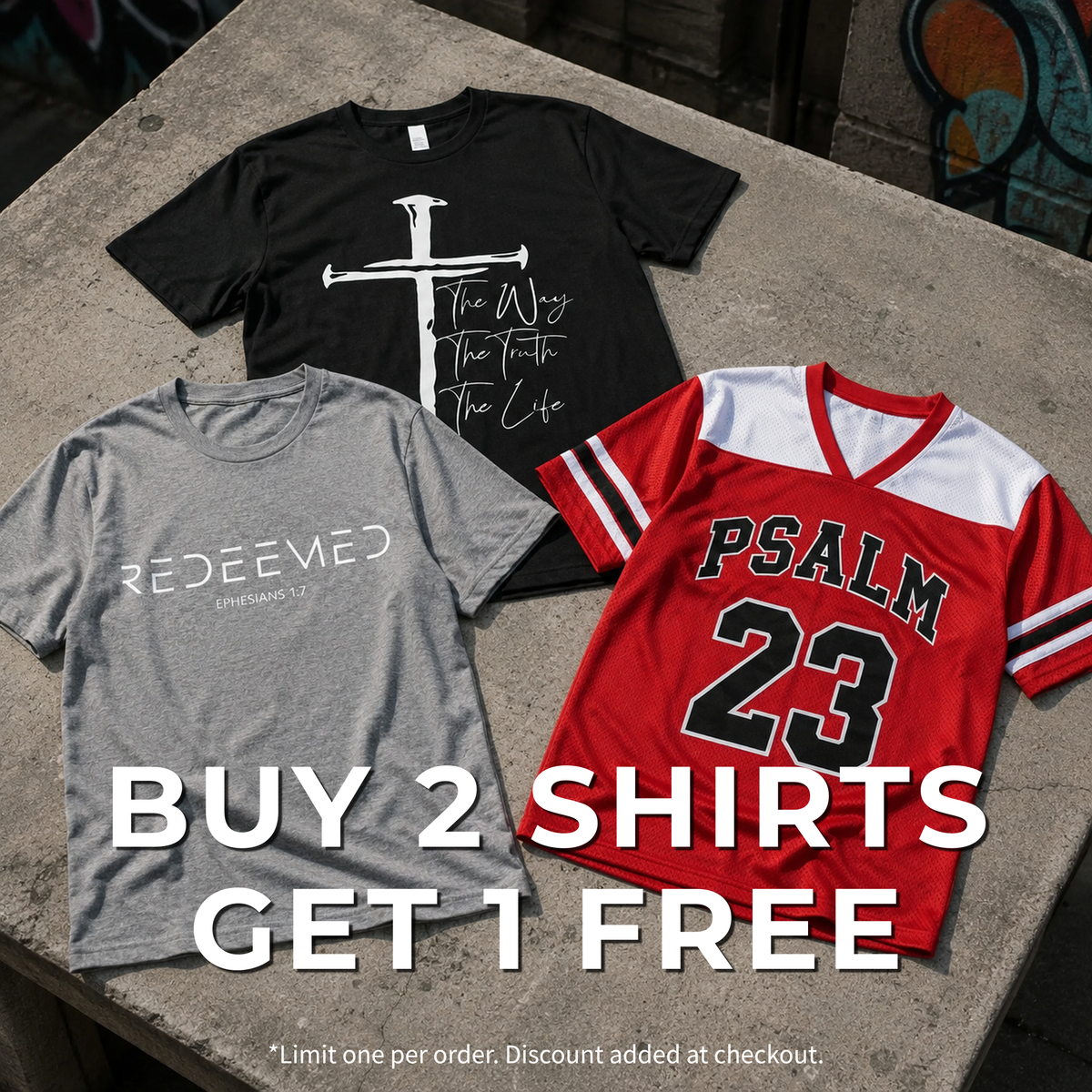


A stack of matching shirts on a folding table can do more than make a group easy to spot. It can help a new student feel like they belong, give a volunteer team a shared sense of purpose, or turn a retreat photo into a reminder of a moment God met your community. This guide to Christian group apparel is for choosing pieces people will actually want to wear after the event is over.
The goal is not to put a logo on the first shirt you find. It is to create something that feels true to your people: comfortable enough for real life, meaningful enough to keep, and styled well enough that no one quietly leaves it in the back of a drawer.
Start With The Moment You Want To Mark
Before choosing colors or writing a phrase, get clear on the occasion. A youth retreat, women’s Bible study, worship team gathering, service project, church camp, and family reunion may all need group apparel, but they do not need the same thing.
For a one-day outreach event, visibility may matter most. A clear message and a color that helps your team find one another can be genuinely useful. For an ongoing small group, the better choice may be a softer, more understated tee or sweatshirt that works with jeans, leggings, and the ordinary rhythm of the week.
Ask one simple question: What do we hope people feel when they put this on? Maybe it is welcomed, encouraged, steady, seen, or ready to serve. That answer is more helpful than starting with a trendy graphic. It gives the design a center.
A leadership team may want apparel that quietly communicates unity. A youth group may want something energetic and photo-ready. A Bible study may prefer a design with a gentle faith statement that starts a conversation at the grocery store. The right choice depends on the people wearing it, not just the event calendar.
Choose A Message With Room To Breathe
The strongest Christian group apparel does not try to say everything at once. A shirt is not a bulletin board. It has a few seconds to land, often from across a room.
Choose one central phrase, Scripture reference, or faith-forward idea that your group can carry naturally. Keep the wording readable and the design uncluttered. If someone needs to stand close to understand the message, it may be too busy for a group piece.
There is a difference between meaningful and overloaded. A bold statement on the front paired with a smaller group name, event date, or verse reference can feel balanced. On the other hand, putting every sponsor, theme, location, and paragraph-length message on one garment often makes it feel more like a giveaway than something personal.
Think about what happens after the event. Will a parent wear it on a school run? Will a college student pair it with a denim jacket? Will a volunteer reach for it on a slow Saturday morning? A message with room to breathe has a better chance of becoming part of someone’s real wardrobe.
Pick The Garment Before You Finalize The Design
A great design can still disappoint on a shirt that feels stiff, thin, or awkwardly cut. The garment is part of the message. If you want people to wear their faith with confidence, the piece needs to feel good the moment they pull it on.
Tees are often the practical choice for larger events, warmer weather, and flexible budgets. They are easy to layer and simple to distribute. A midweight tee usually feels more substantial than a lightweight option, though lighter fabric can be welcome for summer camp or outdoor service days.
Sweatshirts and hoodies create a different kind of connection. They feel lasting, especially for retreats, leadership teams, Christmas gatherings, and cooler seasons. They typically cost more and take up more space in an event budget, but they often become the piece people keep reaching for. If your group is small and you want the apparel to feel like a gift, that trade-off may be worth it.
Color deserves just as much care. Black, cream, charcoal, and muted earth tones tend to live easily in everyday closets. Brighter colors can bring energy to youth events or volunteer teams, especially when visibility matters. Consider the print color too. A beautiful design loses its impact when there is not enough contrast to read it quickly.
Build A Size Plan That Welcomes Everyone
Nothing takes the warmth out of a group order faster than making someone feel like an afterthought because their size was unavailable. Inclusive sizing is not a small detail. It is a practical way to say, “We planned for you.”
Whenever possible, collect sizes before placing the order. A quick form works well for a Bible study, ministry team, or retreat group where participants are already registered. Ask people to check the garment’s fit details rather than assume every tee or sweatshirt fits the same way.
For events where you cannot collect sizes in advance, order a thoughtful range rather than relying on only the most common sizes. If the budget allows, build in a few extras. Those pieces are helpful for late sign-ups, guests, volunteers, or the person whose original size simply does not fit the way they hoped.
Also consider whether one style serves your group best. A unisex tee can simplify ordering and create a cohesive look. Offering both tees and sweatshirts can give people more choice, but it adds decisions, inventory, and cost. There is no wrong answer. Choose the option that matches your group’s size, budget, and the amount of coordination your team can realistically handle.
Give The Order Enough Time
Group apparel feels easy when it arrives on time. It feels stressful when someone is tracking a shipment the night before an event. Build your timeline backward from the date you need the garments in hand, not the day you plan to hand them out.
Leave room for design decisions, collecting sizes, approving the final artwork, production, shipping, and an unexpected change or two. If an event date is firm, avoid waiting until the last possible week to decide on colors and quantities. A little margin gives you better choices and a calmer planning process.
Ordering early also lets you think beyond the event. You may want extra pieces for new members, future volunteers, or a few meaningful gifts. A shirt given to a team member after a long season of serving can carry a quiet kind of gratitude.
Make Distribution Part Of The Experience
How you give out group apparel shapes how it is received. Handing shirts over in a rushed line can work, but a small moment of intention can make the piece feel more personal.
At a retreat, place each item at a participant’s seat before the first session. For a volunteer team, hand them out during a quick huddle and share why the message was chosen. For a Bible study, wrap each shirt with a handwritten note or include it on a night when the group is celebrating a milestone. The gesture does not need to be elaborate. It just needs to feel considered.
Encourage a group photo, but do not let the photo be the whole point. The real win is seeing the apparel move beyond the event: worn to coffee, carpool, practice, work, and ordinary errands. That is where a simple phrase can become a small daily reminder of truth and community.
Let Your Group’s Personality Lead
The best guide to Christian group apparel is not a checklist of what every other group is doing. It is an honest look at your own community. Maybe your people are quiet and thoughtful. Maybe they are full of teenagers who bring joyful chaos. Maybe they are a team of faithful volunteers who show up before anyone else and leave after the last chair is stacked.
Choose apparel that honors that story. Keep the message clear. Choose a garment people can live in. Plan enough time to get the details right. Then let the piece do what meaningful clothing does best: meet people in an ordinary moment and remind them they are part of something held together by faith.
Wear The Word Every Day.

